
South Carolina FOIA Basics
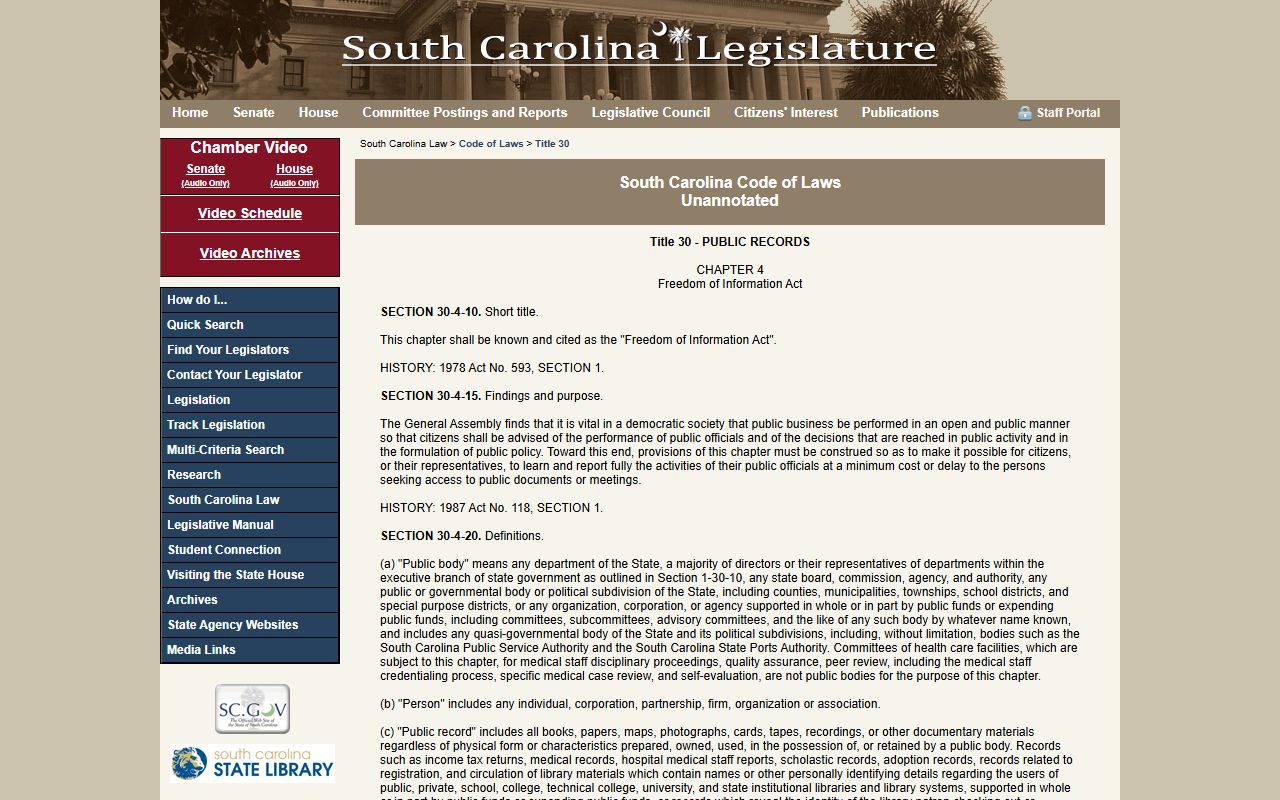
The Freedom of Information Act sits in Title 30, Chapter 4 of the state code. Its stated purpose is that public business be done openly, so citizens can see how officials act, at minimum cost or delay. It defines public body and public record broadly, so county offices and the Sheriff's Department generally fall under it.
You do not need to give a reason to request a record. The law sets the right to inspect and copy, the timing for a response, and the fees an office may charge. The full South Carolina Freedom of Information Act spells out these rules.
A request should be in writing, even though the law does not require a special form. A written request creates a record of what you asked for and when. The county directs FOIA requests to its Department of Public Information, which then routes them to the office that holds the records. That office reviews the request, applies any exemptions, and gives a cost estimate for larger pulls before it starts work.
The Lexington County FOIA Request Form
The county uses a FOIA request form handled by its Department of Public Information. The form asks what records you want and any details that help locate them, such as dates, names, addresses, or TMS numbers. The county can charge for copying and research time and may ask for a deposit. The table below lists the form fields.
| Field Label | Type | Required | Notes |
|---|---|---|---|
| Public information requested | Multiline text | Yes | Describe the documents you want |
| Other clarifying information | Multiline text | No | Dates, names, addresses, TMS numbers |
| Requester contact | Text | Yes | Name and contact for the response |
| Cost acknowledgment | Notice | n/a | County may charge copying and research time |
| Deposit | Notice | Conditional | A deposit or estimate may apply |
The county also links an online FOIA request portal through its services page. Send written requests to the Department of Public Information at 212 South Lake Drive, Suite 602, or call (803) 785-8210.
How to File a Public Records Request
Filing is straightforward if you aim the request at the right office. Court records go to the Clerk or the court that holds them. County agency records go to the Department of Public Information. The steps below cover a county FOIA request.
- Identify the office that holds the record you want.
- Write the request clearly, listing the documents and any dates or names.
- Submit the county FOIA form by mail, in person, or through the online portal.
- Wait for the county's response and any cost estimate or deposit request.
- Pay the reasonable fees, then receive the records or an exemption notice.
For court case files specifically, the Public Index is faster than a FOIA request. See the Lexington County court records page.
Fees and Deposits
South Carolina FOIA lets a public body charge reasonable fees for copies and for staff time spent searching and preparing records. The county may ask for a deposit or give a cost estimate before it pulls a large request. Court offices also charge for copies and certifications. The table below shows common copy fees across county court offices.
| Item | Fee |
|---|---|
| Photocopy (per page) | $0.25 |
| Certified copy | $5.00 plus $0.25 per page |
| Exemplified / authenticated copy | $20.00 |
| FOIA research and copying time | Reasonable cost, deposit may apply |
A victim is entitled to a Sheriff's incident report at no charge under state law. For most other records, the office can recover the reasonable cost of copies and the staff time spent on the search, so a large or complex request usually costs more than a single document pull.
Sheriff Incident Report Requests
Incident reports follow a separate path from a county FOIA request. The Sheriff's headquarters page hosts an online report request form, but only the victim of a crime can request through it, and a case number is required. Case numbers are 8 to 10 digits, with the first two digits being the year.
Reports involving juvenile or sexual assault victims cannot be released through the online form. Those must be requested in person at Gibson Road or through the Victim Assistance Officer. For arrest and booking data, see the arrest records page.
Note: Erroneous information on an incident report request causes it to be discarded, and the department will not correct the request for you.
Response Timing and Deposits
State law sets timelines for a FOIA response, and the county follows them. A public body reviews a request, decides what it can release, and gives a cost estimate before it pulls a large set of records. For bigger requests, the county may ask for a deposit, often a share of the estimated cost, before staff begin the work.
The county directs FOIA requests through its Department of Public Information, which routes them to the office that holds the records. The county also offers an online FOIA request portal through its services page, in addition to the paper form. Either path starts the same review and fee process.
Court Records vs Agency Records
Not every public record is a FOIA record. Court case files answer to court rules and any sealing order, so they are not pulled through a county FOIA request. County agency records, such as county department files, are the ones FOIA reaches. The Clerk of Court keeps court records, while the Department of Public Information handles county FOIA.
Beyond the courts, the county and Register of Deeds keep records such as deeds, business filings, and property data. Vital records like birth and death certificates run through the state, not the county clerk.
Knowing the custodian saves time. A deed or property record is a Register of Deeds matter. A marriage license is a Probate Court record. A birth or death certificate comes from the state Bureau of Vital Statistics in Columbia. A jail booking record is a Sheriff record. A county FOIA request reaches county department files, while court files come from the Clerk or the court that holds them. Sending a request to the wrong office only adds delay, so match the record to its keeper first.
Exemptions and Redactions
FOIA lists categories that an office can withhold or redact. These can include certain law-enforcement, privacy, trade secret, and attorney work-product material, plus protected personal information. When part of a record is exempt, the office separates the exempt and non-exempt parts where it can, rather than withholding the whole file.
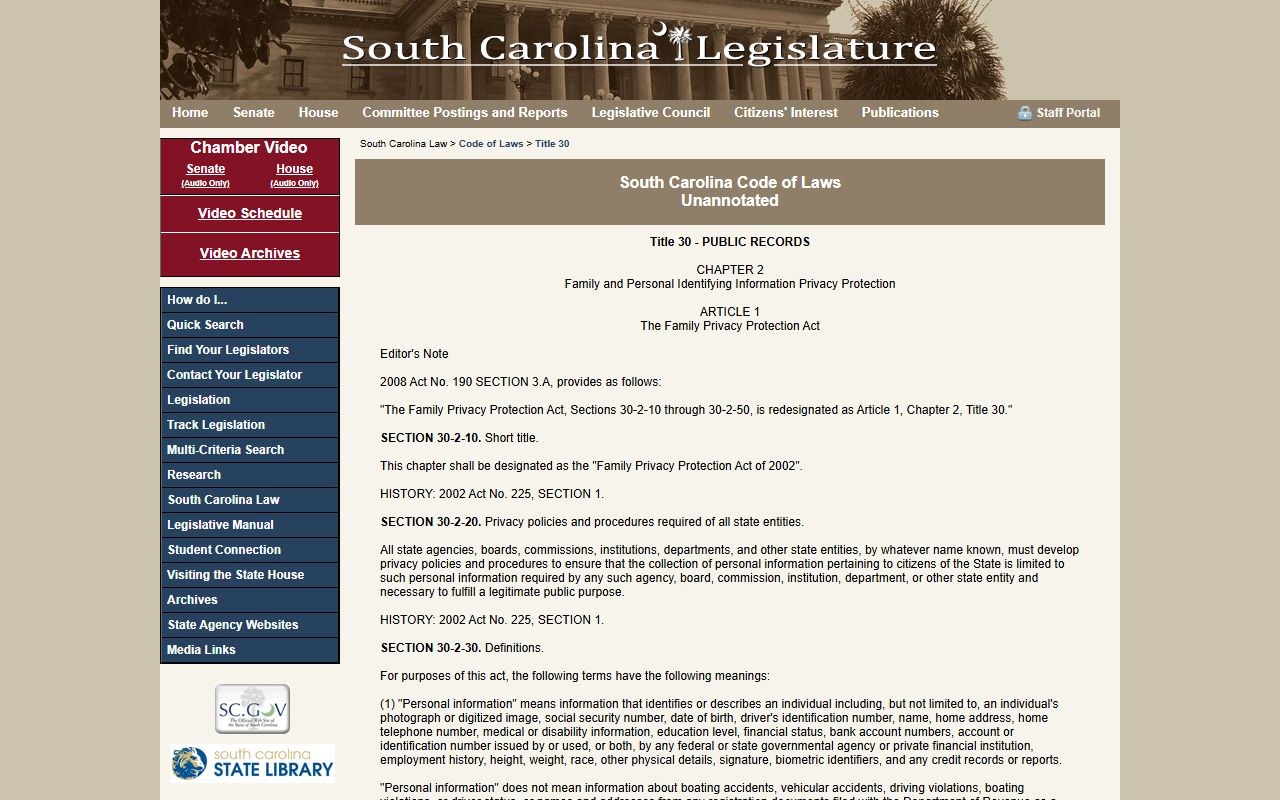
Jail custody records are open for the prior three months, but medical, juvenile, victim, mental health, and active investigative details can be withheld. Personal data is also protected by the state Family Privacy Protection Act.
DMV Privacy and Juvenile Records
Some records carry extra privacy rules. Driver records are limited by the federal Driver's Privacy Protection Act and the state Family Privacy Protection Act, even though some traffic convictions show in court files. To get another person's driving record, you need their consent or a permitted purpose under federal law.
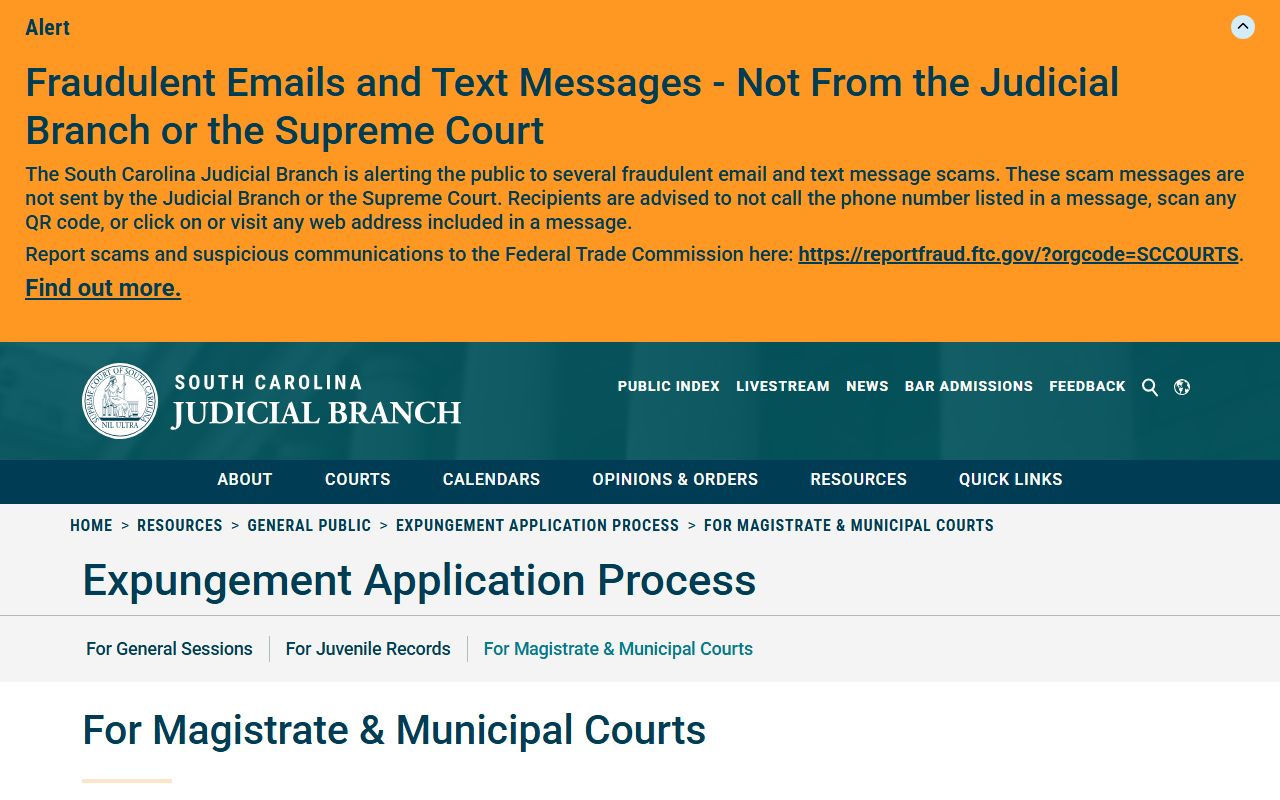
Juvenile records are restricted under state law. Expunged cases also leave public view. Summary courts must expunge not-guilty, dismissed, or nolle prossed cases at no fee, and the summary-court expungement process is explained by the Judicial Branch.
Appealing or Challenging a Denial
If a request is denied, you have options. The office must point to a listed exemption to withhold a record. A denial can be challenged through court action under FOIA. South Carolina does not use a public access counselor like some states, so the enforcement path is generally judicial.
For help, South Carolina Legal Services may assist eligible residents with civil legal needs, and the SC Bar referral can help find a private lawyer. For certified copies from the court, use the Clerk of Court, and for court case lookups, use court records.