South Carolina Uses Circuit Court
South Carolina does not call its main trial court a district court. The court of general jurisdiction is the Circuit Court. It splits into the Court of Common Pleas for civil cases and the Court of General Sessions for criminal cases. The Circuit Court also has limited appellate jurisdiction over appeals from Probate, Magistrate, and Municipal courts.
The state runs 16 judicial circuits. Each has at least one resident circuit judge. Judges serve six-year staggered terms and are elected by the General Assembly after screening and nomination. The South Carolina Judicial Branch explains the Circuit Court structure in full.
The Eleventh Judicial Circuit
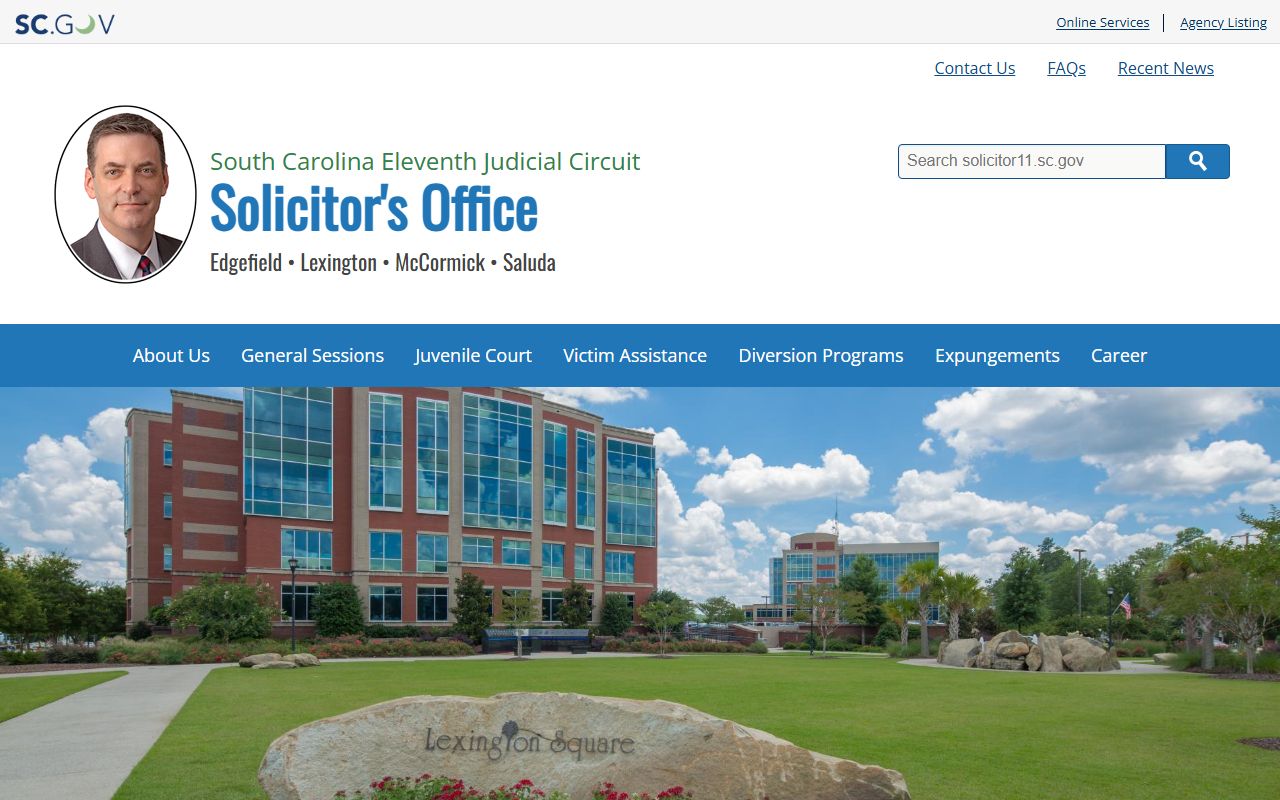
Lexington County belongs to the Eleventh Judicial Circuit, which also covers Edgefield, McCormick, and Saluda counties. The Eleventh Circuit Solicitor prosecutes criminal offenses for all four counties. The current Solicitor is Rick Hubbard, and the office sits in Suite 309 of the Judicial Center.
The Solicitor's office runs the criminal docket and several diversion programs for the circuit.
Common Pleas Civil Court
The Court of Common Pleas is the civil side of the Circuit Court. It hears contract disputes, personal injury, property cases, and large civil claims. Judgments, liens, and foreclosure referrals run through it. Lawyers file civil pleadings with the Clerk of Court.
Foreclosure cases take a special route. The Master-in-Equity, a division of Circuit Court, hears most foreclosures after a case is referred by an Order of Reference. For how to search civil files, see the Lexington County court records page.
General Sessions Criminal Court
The Court of General Sessions is the criminal side of the Circuit Court. It handles serious crimes, while minor offenses stay in Magistrate Court. The Clerk receives criminal warrants and transmits them to the Solicitor, receives bail, and keeps the case records.
The Solicitor decides which charges go forward to General Sessions and which divert to a program. For arrest data and charge-versus-conviction detail, see the arrest records page, and for warrants, see the warrant records page.
Family Court and Probate Court
Two trial courts run alongside the Circuit Court. Family Court hears divorce, custody, support, and protection order cases, with its own portal. Probate Court handles estates, marriage licenses, guardianships, conservatorships, and mental health commitments.
Each keeps separate records from the Circuit Court. See the marriage and divorce records and probate records pages for those searches.
Magistrate and Municipal Courts
Below the Circuit Court are the summary courts. Magistrate Court is the county's summary criminal and small claims court. It tries traffic cases and misdemeanors carrying up to 30 days in jail or a $500 fine plus assessments, and it handles small claims up to $7,500 and landlord-tenant disputes. Several district magistrate offices serve different parts of the county.
Municipal courts are separate city and town courts for municipal ordinance and city traffic cases. The comparison below shows how the three levels differ.
| Point | Circuit Court | Magistrate Court | Municipal Court |
|---|---|---|---|
| Level | General jurisdiction | County summary court | City summary court |
| Criminal | Serious crimes (General Sessions) | Up to 30 days / $500 | City ordinance and traffic |
| Civil | Large suits (Common Pleas) | Small claims up to $7,500 | Limited city matters |
| Appeals go to | Court of Appeals | Circuit Court | Circuit Court |
Master-in-Equity Court
The Master-in-Equity is a specialty civil function of the Circuit Court. It hears most foreclosure cases and a number of non-jury civil matters. No case can start there directly. Each case is assigned by the Circuit Court through an Order of Reference, and once referred, the Master has the authority a circuit judge sitting without a jury would have.
Judicial sales run on the first Monday of the month in Courtroom 3-A of the Judicial Center. The Master-in-Equity page posts sale rosters, sale results, and due-diligence warnings for bidders, along with instructions for self-represented litigants. Records for referred cases sit in the Clerk of Court Records Room on the first floor.
Judges and Court Administration
Circuit judges are elected by the General Assembly, not by county voters, after a screening and nomination process. They serve six-year staggered terms. Each of the state's 16 circuits has at least one resident circuit judge, and judges rotate to hear cases across the circuit.
The summary courts run on a different track. Magistrate Court is established under the state Unified Judicial System and supervised by the Chief Justice through Court Administration. The Chief Magistrate and a court administrator manage the county's magistrate offices. For the rosters and dockets these courts publish, see the court dockets page.
South Carolina is one of a few states where the legislature, not the public, elects trial judges. Candidates go through the Judicial Merit Selection Commission, which screens and nominates them before the General Assembly votes. That process applies to circuit and family court judges, while magistrates are appointed. The result is a single statewide structure rather than county-by-county judicial elections.
How a Case Moves Through the System
Cases climb a ladder. A summary court case can be appealed up to the Circuit Court, and a Circuit Court case can be appealed to the state appellate courts. The path depends on the case type and the appellate rules.
Case flow: Magistrate or Municipal Court › Circuit Court › Court of Appeals › Supreme Court of South Carolina
The Circuit Court hears appeals from Probate, Magistrate, and Municipal courts. From the Circuit Court, most appeals move to the South Carolina Court of Appeals and then, in some cases, the Supreme Court of South Carolina.
Lexington County Court Location Table
The county's court offices cluster in the Judicial Center, with a few exceptions for traffic and bond court. The table below lists the main courts and offices, their addresses, and their phone lines.
| Court / Office | Address | Phone |
|---|---|---|
| Clerk of Court | 205 East Main Street, Lexington | (803) 785-8212 |
| Family Court | 205 East Main Street, Suite 227 | (803) 785-8212 |
| Probate Court | 205 East Main Street, Suite 134 | (803) 785-8324 |
| Master-in-Equity | 205 East Main Street, Suite 204 | (803) 785-8291 |
| Solicitor's Office | 205 East Main Street, Suite 309 | (803) 785-8352 |
| Central Traffic Court | 139 East Main Street, Suite A | (803) 785-2142 |
| Bond Court | 521 Gibson Road | (803) 785-2845 |
Magistrate offices also operate in Lexington, Irmo, Batesburg-Leesville, Swansea, Oak Grove, and Cayce-West Columbia. Each district office has its own judge and serves a different part of the county, so a summary court case is heard at the office tied to where the matter arose.
Where the Circuit Court Sits
The Circuit Court operates from the Marc H. Westbrook Lexington County Judicial Center at 205 East Main Street, in downtown Lexington at the corner of East Main Street and South Lake Drive. The building holds the Clerk of Court, Family Court, Probate Court, Master-in-Equity, the Solicitor, and the diversion programs under one roof.
Court business spread out over time. A courthouse and jail built in 1940 at 139 Main Street still anchors Central Traffic Court and several magistrate functions, while the main court offices moved to the modern Judicial Center. Visitors should not confuse 205 East Main, where the Circuit Court sits, with 139 East Main for traffic court or 521 Gibson Road for bond court.
Specialty and Diversion Courts
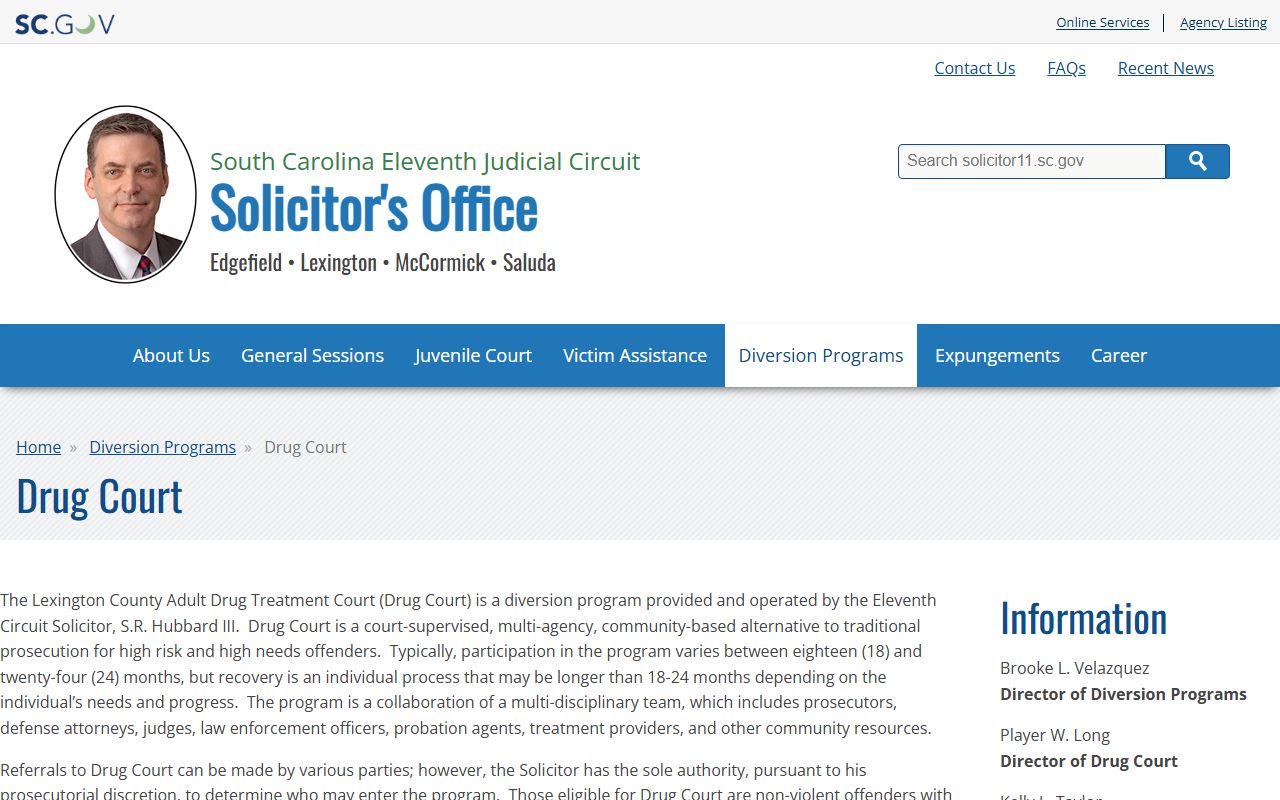
The circuit runs a court-supervised diversion track. The Lexington County Adult Drug Treatment Court is operated by the Solicitor as an alternative to prosecution for high-risk, high-need offenders. Most people spend 18 to 24 months in the program, and entry is the Solicitor's decision under prosecutorial discretion.
The Solicitor also offers Pre-Trial Intervention, the Alcohol Education Program, and the Traffic Education Program. Completing a program can affect a case outcome and expungement eligibility.
Expungement of eligible records is handled with the Solicitor and the court under the state expungement statutes.