
What a Lexington County Court Docket Is
A docket is the official list of filings, events, and hearings in a case. It shows the order of what happened and what comes next. People often use the word docket to mean two things: the case docket, which tracks one case from start to finish, and the court docket or roster, which lists the cases set for a given day or term. Both matter when you track a Lexington County case.
The Clerk of Court manages the dockets for General Sessions, Common Pleas, and Family Court. The Clerk compiles trial lists, manages the dockets of cases to be heard, and staffs courtrooms while court is in session. Magistrate courts keep their own calendars, and bond court runs on a daily schedule.
Circuit Court Rosters and Motion Rosters
The Clerk of Court page links several roster tools. The Circuit Court rosters show the cases set for trial terms, and the non-jury motion roster lists motions set to be heard without a jury. The statewide court calendar shows term schedules across the circuit. For foreclosure cases, the Master-in-Equity publishes its own judicial sale rosters, with sales held on the first Monday of the month in Courtroom 3-A of the Judicial Center.
These rosters change often. Always check the most recent posting, because cases get added, continued, or moved between terms.
Docket Entries on the Public Index
The Lexington County Public Index shows case-level docket entries for Circuit and Magistrate cases. Each entry has a date and a short description of what was filed or ordered. The Public Index runs through the South Carolina Judicial Branch site, and the county appears with Circuit Number 11 and County Number 32. A browser with cookies and JavaScript is needed, and some browsers need a pop-up exception for detail.
Start your docket lookup at the state case-search page or the direct county link.
- Open the South Carolina Judicial Branch Case Records Search or the Lexington County Public Index.
- Choose Lexington County and the matching court.
- Search by case number or party name.
- Open the case and scroll to the docket or roster entries.
- Read the most recent entry for the next scheduled date.
For the full case-record fields, see the Lexington County court records page.
Family Court Dockets in Lexington County
Family Court keeps its dockets apart from the Public Index. The Clerk of Court supports Family Court and links a public portal for family cases and dockets, run through the state Department of Social Services case management system. Divorce, custody, support, and protection order matters all move on the Family Court calendar. Lawyers use a separate attorney portal that needs an Attorney Information System ID and password.
Some family dockets show only limited detail because the case involves children or sensitive facts. Juvenile, adoption, and abuse cases are restricted. For the portal links and what Family Court covers, see the Lexington County court records page and the marriage and divorce records page.
How to Read a Lexington County Roster
A roster groups cases by court term, judge, or session type. Each line ties a case number to a party name and a set date. Trial rosters list cases ready for trial. Motion rosters list pending motions. Summary court calendars list traffic and minor criminal cases set for a magistrate.
Read the roster header first. It names the court, the judge, and the term dates. Then find your case by number or party name. The position on a roster does not fix the exact hour your case is called, because terms often move several cases through one session. Plan to arrive early and wait.
One common mix-up is treating a roster date as final. A case can be continued to a later term, settled before trial, or pulled from the list. Always check the latest roster, not an old copy.
What a Docket Entry Shows
A single docket entry packs a lot into a short line. The fields below appear on a typical Lexington County docket or roster.
| Field | What It Shows |
|---|---|
| Entry Date | The date the filing or event was recorded |
| Description | The filing or action, such as motion filed or order signed |
| Hearing / Roster Date | The next scheduled court date for the case |
| Judge | The judge or judicial officer assigned |
| Disposition | The outcome when the event resolves a charge or motion |
Read entries from the bottom up or by date to follow a case in order.
Magistrate Court Calendars
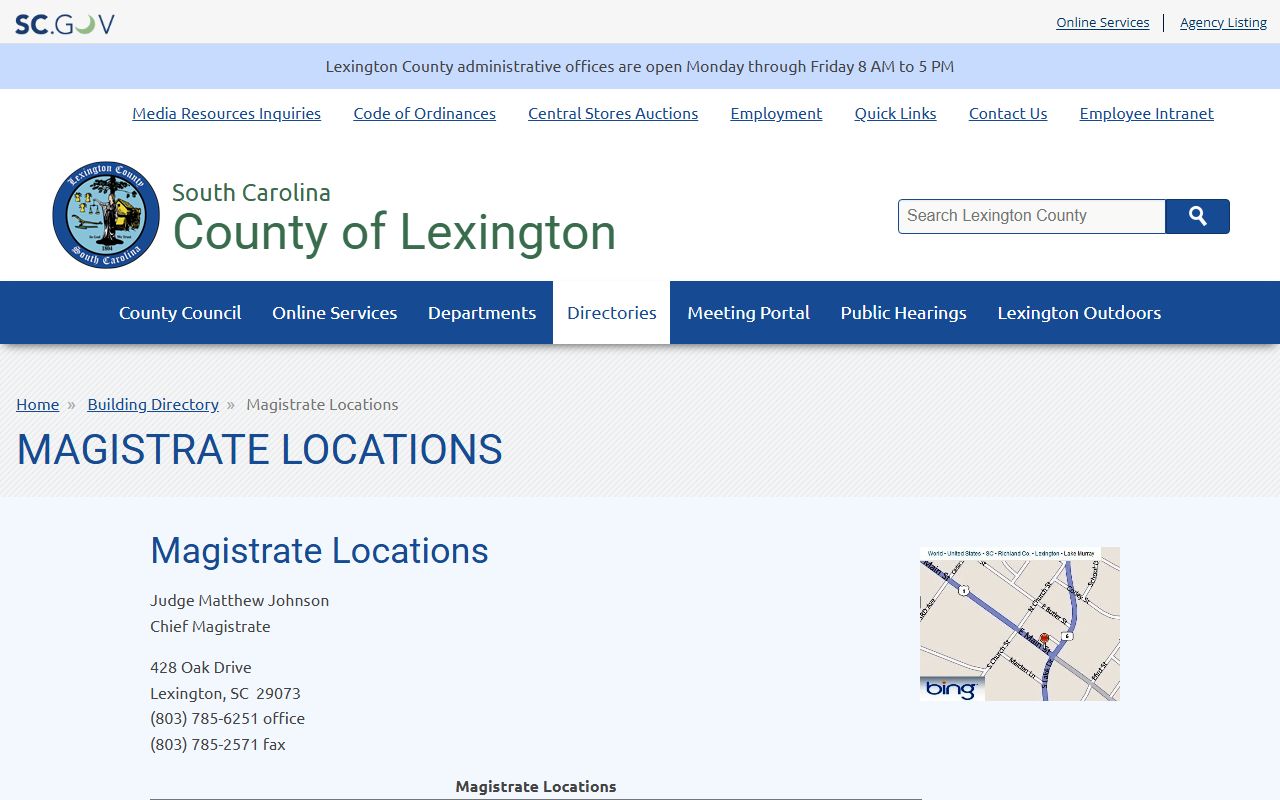
Magistrate Court is the county's summary court for traffic, small claims, landlord-tenant, and minor crimes. Several district magistrate offices serve different parts of the county, each with its own calendar and judge. The county building directory lists every magistrate office, its address, and its phone line.
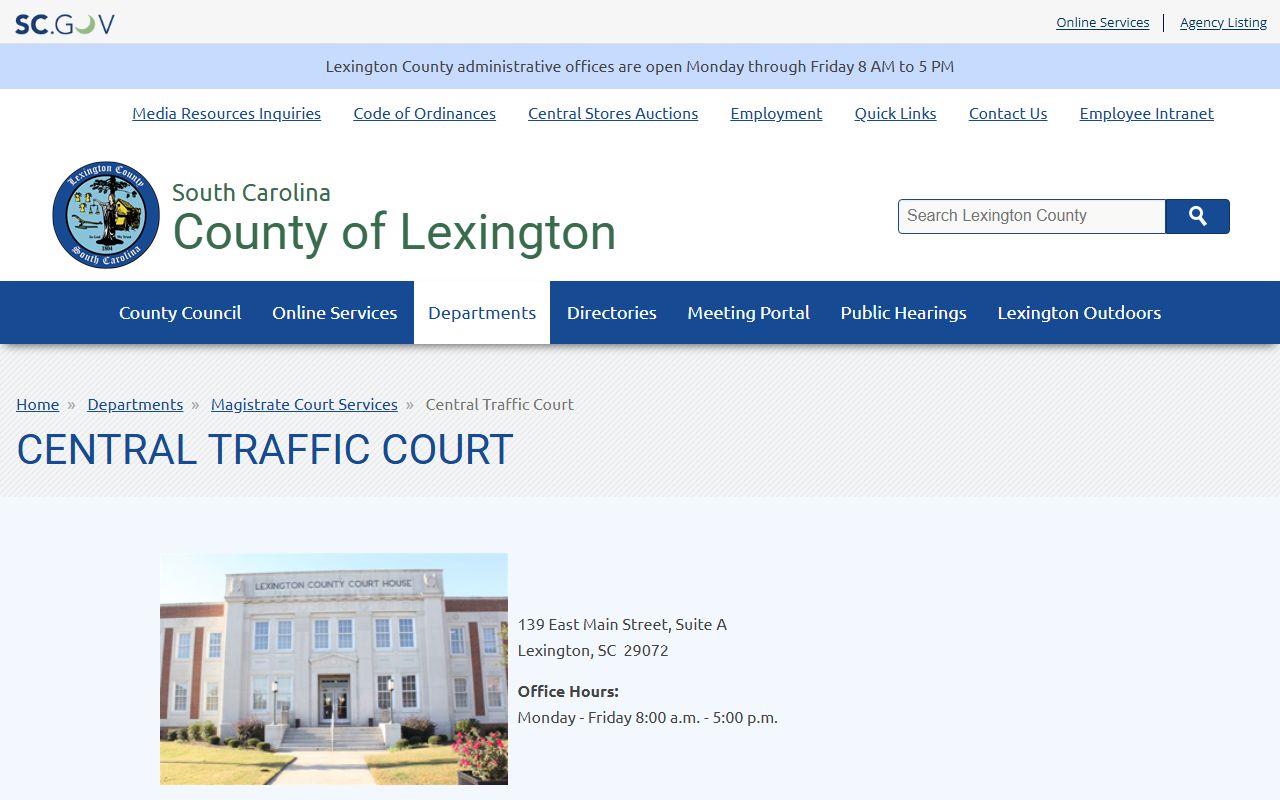
Central Traffic Court handles its own docket for traffic and DUI cases at the old courthouse on East Main Street.
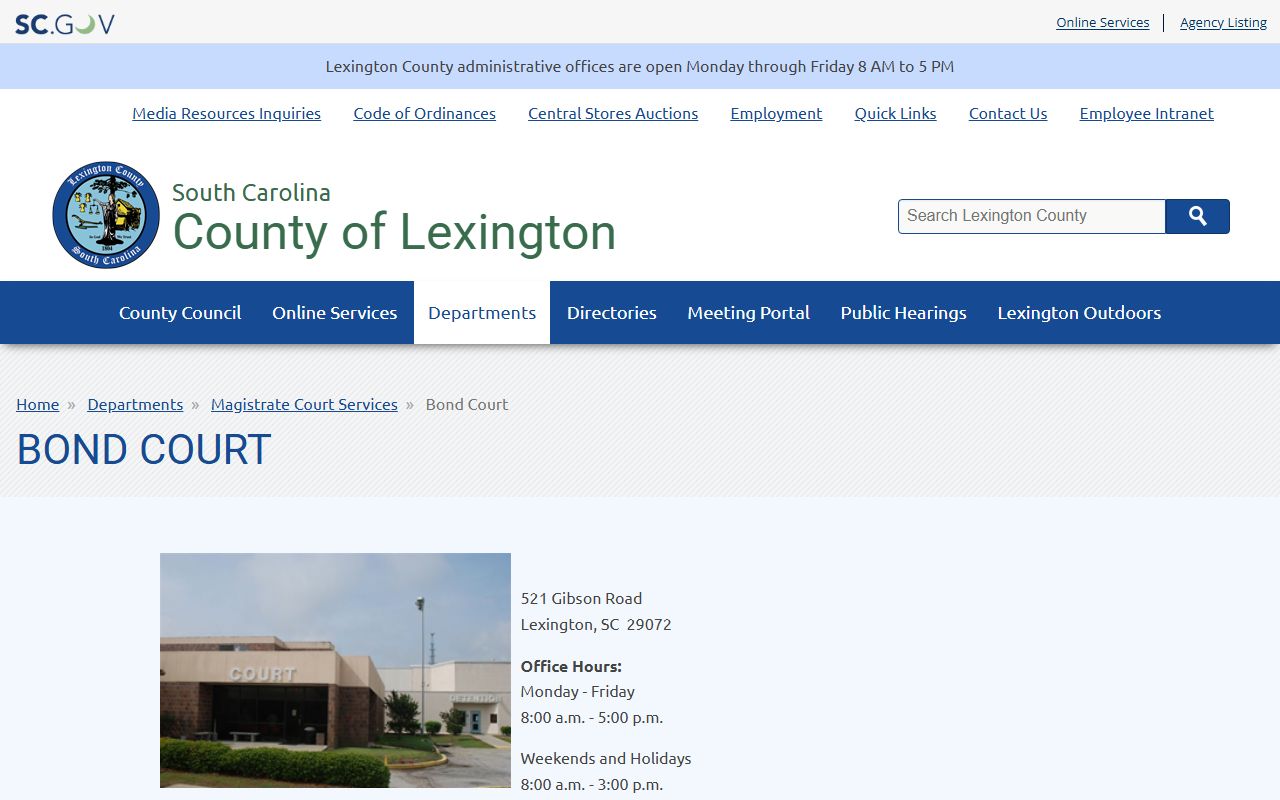
Bond Court Sessions in Lexington County
Bond Court runs on a fixed daily schedule at the Sheriff's complex at 521 Gibson Road, not the Judicial Center. Sessions are held at 10 a.m. and 3 p.m. on weekdays. On weekends and holidays, bond court runs from 10 a.m. until 3 p.m. People arrested are usually seen at the next session for an initial appearance and a bond decision.
The bond court page lists the session schedule and location.
The Sheriff's Judicial Services unit handles court security and prisoner transport tied to these sessions.
Court Docket vs Full Case Record
A docket and a full case record are not the same thing. The docket is the calendar and event log. The full record holds the documents behind those events, such as the complaint, motions, and orders.
| Point | Court Docket / Roster | Full Case Record |
|---|---|---|
| What it is | List of events and scheduled dates | The complete case file and documents |
| Best for | Finding the next hearing or term | Reading filings, orders, and dispositions |
| Where to get it | Rosters, Public Index entries, court calendar | Public Index detail or the Clerk's office |
| Certified copy | Not usually needed | From the Clerk for legal use |
Use the docket to plan, and the record to prove.
Master-in-Equity Sale Rosters
Foreclosure cases produce their own roster. The Master-in-Equity, a division of Circuit Court, holds judicial sales on the first Monday of each month in Courtroom 3-A of the Judicial Center. The court posts a judicial sale roster ahead of each sale and posts sale results afterward. Bidders are warned to do their own due diligence before a sale.
The Lexington County Master-in-Equity transferred to the statewide case management system, which changed the format and access for its sale rosters. So a bidder or party tracking a foreclosure should use the current roster format rather than an older saved link. Records for these referred cases sit in the Clerk of Court Records Room.
Common Lexington County Docket Terms
Dockets use a handful of words over and over. Learning them makes a roster easy to read. The list below covers the terms you will see most often on a Lexington County court docket.
- Roster
- The list of cases set for a court term or session.
- Term
- A block of court time, often a week, when a group of cases is heard.
- Continuance
- An order moving a case to a later date or term.
- Disposition
- The final outcome of a charge or case, such as guilty, dismissed, or judgment.
- Non-jury
- A matter heard by a judge alone, without a jury, often a motion.
- Bench warrant
- A warrant a judge issues when a person misses a scheduled court date.
A bench warrant is a real risk of missing a docket date. If you cannot make a hearing, contact the court before the date rather than skipping it.
Keeping Up With Hearing Dates
Dates move. A term can be continued, a motion can be reset, and a roster can change days before a session. Check the roster close to the court date, and confirm with the court if anything looks off.
Note: A scheduled roster date is not a guarantee; confirm the time and courtroom with the court before you travel for a hearing.
For arrest and custody timing tied to bond court, see arrest records and inmate records. For certified copies of orders shown on a docket, use the Clerk of Court.