Clerk of Court Contact and Office
The Lexington County Clerk of Court is Lisa M. Comer. The office is in the Marc H. Westbrook Judicial Center at 205 East Main Street, in Suite 128. It is open weekdays from 8 a.m. to 5 p.m. The Clerk is elected to a four-year term, and the office answers to state law under the South Carolina Judicial Department's Court Administration.
Lexington County Clerk of Court
205 East Main Street, Suite 128
Lexington, SC 29072
(803) 785-8212
Fax (803) 785-2215 / TTY (803) 785-2860
Clerk Duties Under State Law
The Clerk's duties are set by state law and cover the full life of a case. The office files pleadings and motions, manages dockets, and gives judges the filings and documents they need for hearings and trials. It also supports juries and handles money tied to cases.
The core duties from the official page include the following.
- Supports General Sessions, Common Pleas, and Family Court.
- Receives criminal warrants and transmits them to the Solicitor.
- Receives bail, compiles trial lists, and manages dockets.
- Staffs courtrooms while court is in session.
- Receives fees, fines, and costs, and maintains all court records.
The office also assists prospective and active jurors in General Sessions and Common Pleas.
General Sessions and Common Pleas
The Clerk supports both sides of the Circuit Court. The Court of General Sessions is the criminal side, where serious charges are tried. The Court of Common Pleas is the civil side, where lawsuits, judgments, and foreclosure referrals are handled. The Clerk keeps the records and dockets for both.
For criminal cases, the Clerk receives warrants, transmits them to the Eleventh Circuit Solicitor, and receives bail. For civil cases, lawyers file pleadings with the Clerk, and Master-in-Equity foreclosure files are kept in the Clerk's Records Room. See the Lexington County court records page for how to search these cases.
Family Court Support
The Clerk also supports Family Court. That includes issuing Rules to Show Cause when court orders are not followed, filing Orders of Protection, and transmitting those orders to law enforcement. The Clerk collects and disburses court-ordered child support payments.
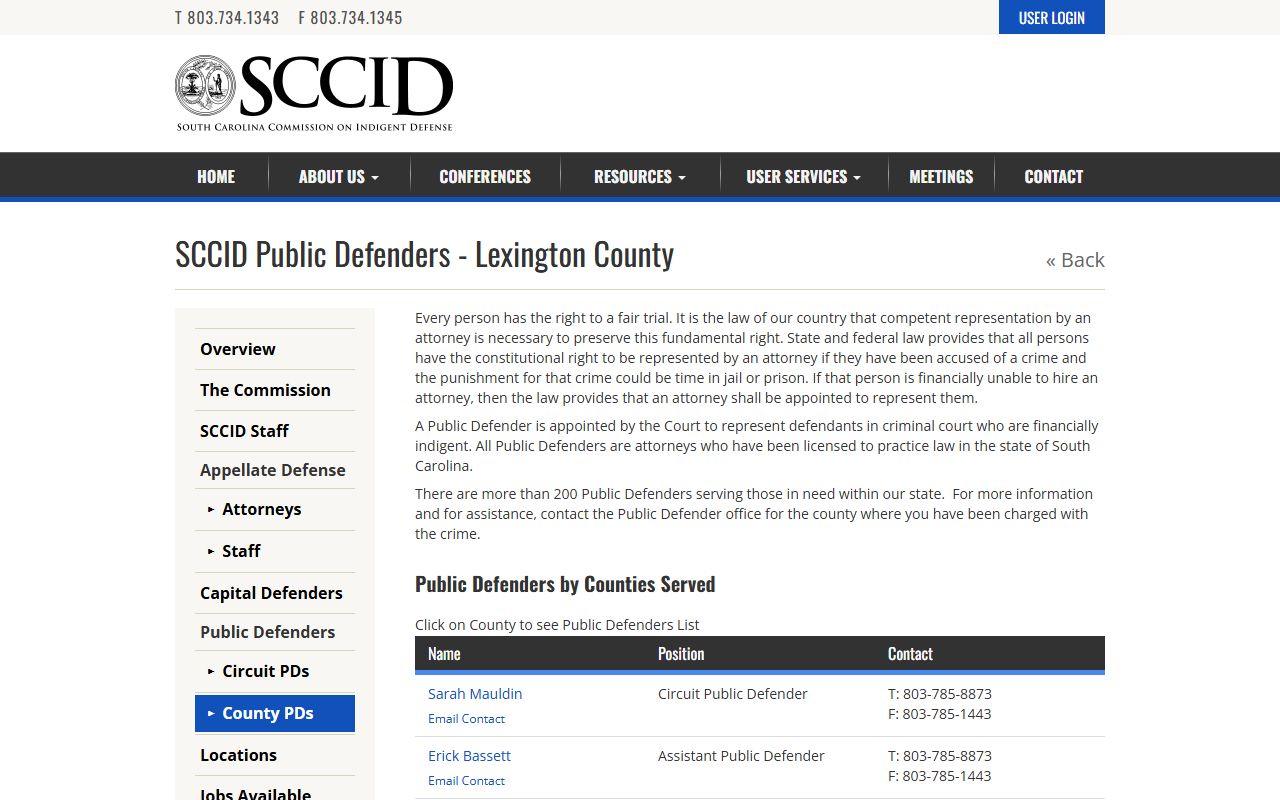
Family Court cases use a separate public portal rather than the Public Index. For divorce and support records, see the marriage and divorce records page. People who cannot afford a lawyer for a criminal charge may qualify for the Public Defender.
Child support is a hands-on part of the Family Court role. The Clerk collects and disburses court-ordered child support payments, so a parent paying or receiving support deals with the Clerk's office for those funds. When a party does not follow a Family Court order, the Clerk issues a Rule to Show Cause that requires the party to explain the noncompliance. For mailed support payments, write the case number on the money order or cashier's check so it posts to the right case.
Dockets, Trial Lists, and Jury Support
A big part of the Clerk's work keeps the courtroom running. The office compiles trial lists, manages the dockets of cases to be heard, and staffs courtrooms while court is in session. It also reports to state and federal agencies on court activity.
Jury support is another duty. The Clerk gives information and help to prospective jurors and to active juries in General Sessions and Common Pleas. So a jury summons, a trial roster, and a courtroom file all pass through the same office. To read the rosters the Clerk maintains, see the court dockets page. The office also submits required reports on court activity to state and federal agencies, which is part of why it keeps such detailed records.
Public Portal Links
The Clerk page links the main search tools. The Judicial Index goes to the Public Index for Circuit and Magistrate cases. The Family Court public portal handles family cases and dockets. The page also links Circuit Court rosters, the non-jury motion roster, the SC court calendar, and SC Judicial Department forms.
Attorneys use a separate Family Court attorney portal that needs an Attorney Information System ID and password. Start a case lookup at the Lexington County Public Index, or see the court dockets page for roster tools.
Payments, Fines, and Bail
The Clerk receives fees, fines, costs, and bail. For mailed child support or fine payments, write the case number on the money order or cashier's check. A notary commission registration is handled by the Clerk for a set fee. The table below shows fees handled at the Clerk and related court offices.
| Item | Amount / Rule |
|---|---|
| Notary commission registration | $10.00 |
| Certified copy | $5.00 plus $0.25 per page |
| Photocopy (per page) | $0.25 |
| Exemplified / authenticated copy | $20.00 |
| Mailed payments | Write the case number on the money order or cashier's check |
The Clerk does not handle speeding tickets, which go to the court listed on the ticket.
How to Request a Certified Copy
A certified copy carries the court's seal and is needed for many legal uses. Online copies from the Public Index are not certified. The steps below cover a certified copy request from the Clerk.
- Find the case number through the Public Index or a prior notice.
- Contact the Clerk of Court at (803) 785-8212 or visit Suite 128.
- Tell the office which document you need certified.
- Pay the certified copy fee, $5.00 plus $0.25 per page.
- Receive the certified copy in person or by the office's process.
Master-in-Equity records for referred cases sit in the Clerk's Records Room on the first floor of the Judicial Center. Expect security screening at the door.
The Records Room and Master-in-Equity Files
Older and non-digital records live in the Clerk's Records Room on the first floor of the Judicial Center. Master-in-Equity foreclosure files, once a case is referred by an Order of Reference, are kept there. So a person researching a foreclosure goes to the same Clerk's office, even though the Master-in-Equity hears the case.
Not every document is online. The Public Index shows case events, but some filings and full documents are only available through the Clerk. For a record that does not appear online, or for a certified copy, the Records Room is the place to ask. Bring the case number to speed up the search, and expect security screening at the building entrance.
Security and the Jury Duty Scam
Everyone entering the Judicial Center passes through a sheriff-staffed screening station, with metal detection and an X-ray or hand search of belongings. There is no storage for items that are turned away, so leave them in your vehicle.
The Clerk page also posts a jury duty scam alert. Callers may pose as court officers and ask for a date of birth, Social Security number, or credit card to clear a fake warrant. The page advises hanging up. The court will not demand payment by phone to clear a warrant, and it will not ask for sensitive personal data over the phone in that way.
Note: The court does not call to demand payment over the phone to clear a warrant; treat such calls as a scam and hang up.
What the Clerk Does Not Handle
Some records sit with other offices. The Clerk does not issue marriage licenses or handle estates; those are Probate Court matters. The Clerk does not handle speeding tickets, which go to the court named on the ticket. Indigent criminal defense is handled by the Public Defender, not the Clerk.
For estates and marriage licenses, see the probate records page. For traffic tickets, see the traffic court records page. The Clerk also cannot give legal advice or recommend a lawyer, so a person with a legal question should contact an attorney or a legal-help service. The Public Defender's office is shown below.